team

Share

It’s not much of an arcade on your own

Every way there is to get somebody else into what you made — from adding a colleague, to a link you hand a stranger, to putting a world in the catalogue where anybody can find it.

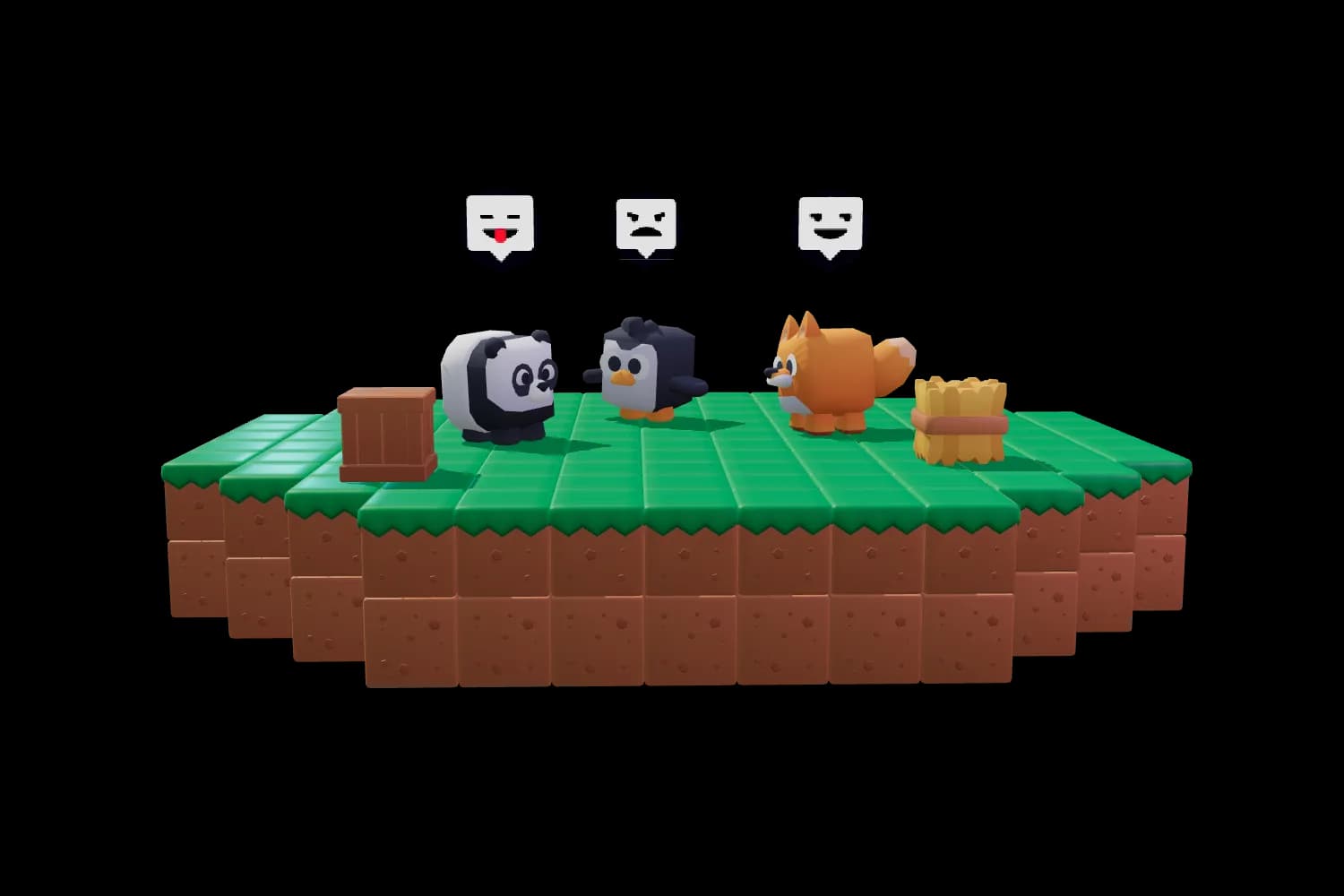
A panda, a penguin and a fox standing together on a small grass island, each with an emote over their head

Doors open

One link, and they’re already inside

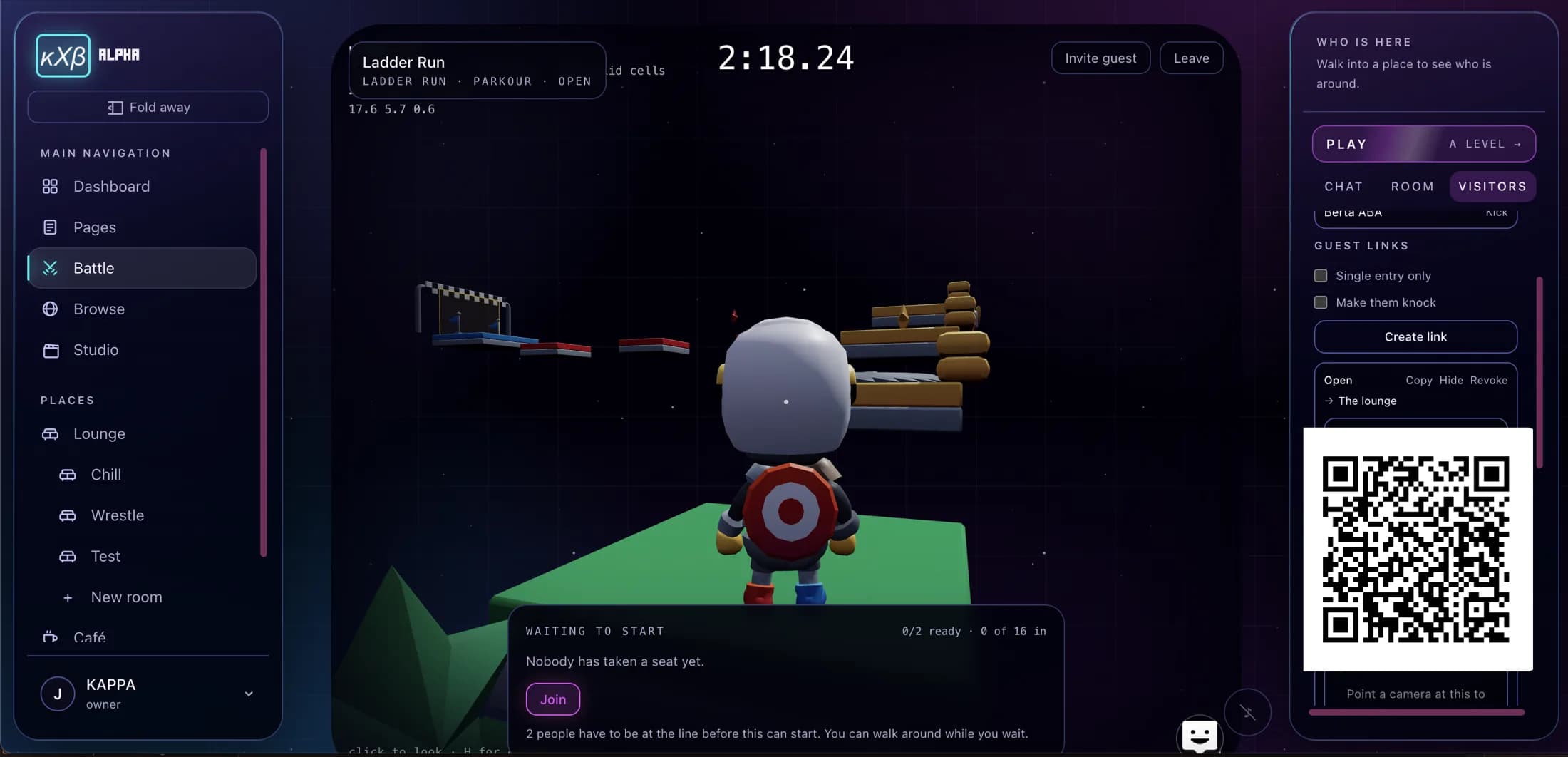
Put the door in the calendar invite, the Discord announcement, the group chat. Whoever opens it types a name, picks one of twenty-four animals, and walks in. Nothing to accept, nothing to install, no password to invent.

Your people

You pay for a space, not for seats

Invite by email. They turn up as owner, admin or member, and you can change that later. Adding somebody costs nothing — the price is per space, and the seat cap while the beta runs is shown live on the pricing section rather than written into this sentence, because it is a flag and it moves.

The last owner cannot leave. Not “shouldn’t” — the rule lives in the domain, so the button is not there to press and no amount of clicking around it will produce a space with nobody in charge of it.

Rooms

One space, several rooms, different rules in each

A room is its own world with its own settings, and the rail switches which one you are in without moving you out of the space.

Listed or unlisted
Unlisted means it is not in the list, not that it is locked.
Creative or battle
Per room, so one can be building while another is fighting.
A cap
Heads at once, or “whatever the event says”.
Guests may build
Or may not. This can only narrow what the space already allows, never widen it.
Chat follows the room
Moving rooms moves the conversation. The lounge has its own, and the rail switches between them without moving you.

Closing a room keeps every block in it. It just leaves the list — so a room you closed after last month’s event is a room you can reopen exactly as it was. And when one fills up, new arrivals are routed to the emptiest room rather than bounced: an event that gets busier than anybody planned degrades into more rooms instead of into a worse frame rate.

Discovery

Publish a world and let strangers play in it

Anything you build can go into the public catalogue, with up to six tags on it. The vocabulary is fixed rather than free text, which is what makes the filters worth having: every one of them has results, and none of them are the same filter spelled two ways.

  • Arena
  • Pitch
  • Hangout
  • Showcase
  • Event
  • Office
  • Nature
  • City
  • Maze
  • Parkour
  • Small
  • Seasonal

Somebody who finds yours can drop it into their own space. Their copy, your original, and no relationship between the two after that — which is the trade: they cannot break yours, and you cannot patch theirs.

Studio

Make a little film of it and send that instead

Screenshots of a 3D world are never quite it. So there are three studios, using the same models the world does: a video studio where you walk your peeps around, give them something to say and move the camera; a picture studio for one staged, lit frame; and a banner studio for the wide one.

They are your peeps, in your space. Make one for a colleague who missed it, or for the top of the announcement, or just because a fox saying something daft is funnier than a paragraph about a fox.

Matches

Challenge a space that isn’t yours

A battlefield is an arena you published for other people to fight in. Yours stays yours; the match happens in a copy of it.

  1. Somebody sets it up

    Name, mode, and where. Football and races get their clock and score limit here.

  2. People join the lobby and pick a side

    Guests can do this — picking a side is the reason they were let in.

  3. Whoever set it up starts it

    And only they can call it off. That rule is in the log, so a client cannot argue with it.

  4. The clock starts from the server

    Rather than from whichever browser pressed the button, so everyone’s match is the same length.

Tournaments, challenges between spaces and the world catalogue are for members. A guest at a weekend event has no space to be challenged by, and two dead links is a worse room than a smaller one.

Not yet

What it doesn’t do yet

Said here rather than found out later.

  • A guest link enters one space. There is no link that hands somebody several.
  • Roles are owner, admin and member. There is no custom permission set and no per-surface role.
  • The catalogue has favourites and tags, but no ratings, no comments and no follower list.
  • A published world is a copy when somebody takes it. Fix yours afterwards and their copy does not change.

Somebody’s waiting for the link.

Next: what there is to do in there · how to build it