xo
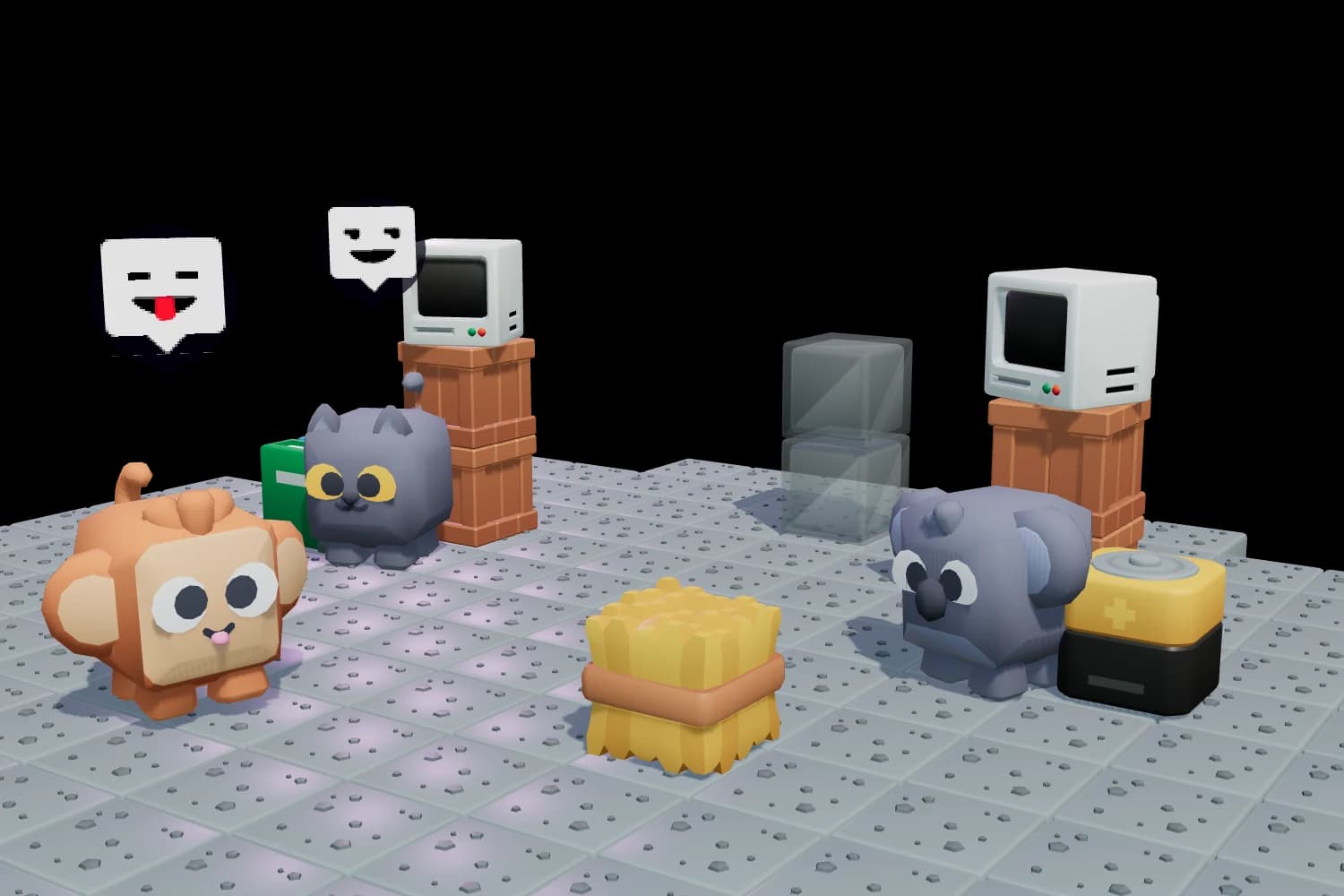
The editor is the room
There is no build screen to go to and come back from. You are standing in the world, holding a block, with everybody else still standing in it — and what you place appears under their feet as you place it.
Create
There are two ways to make something here, and they are genuinely different things rather than a beginner mode and an advanced one. xo builds the room. xp builds the experience.
xo
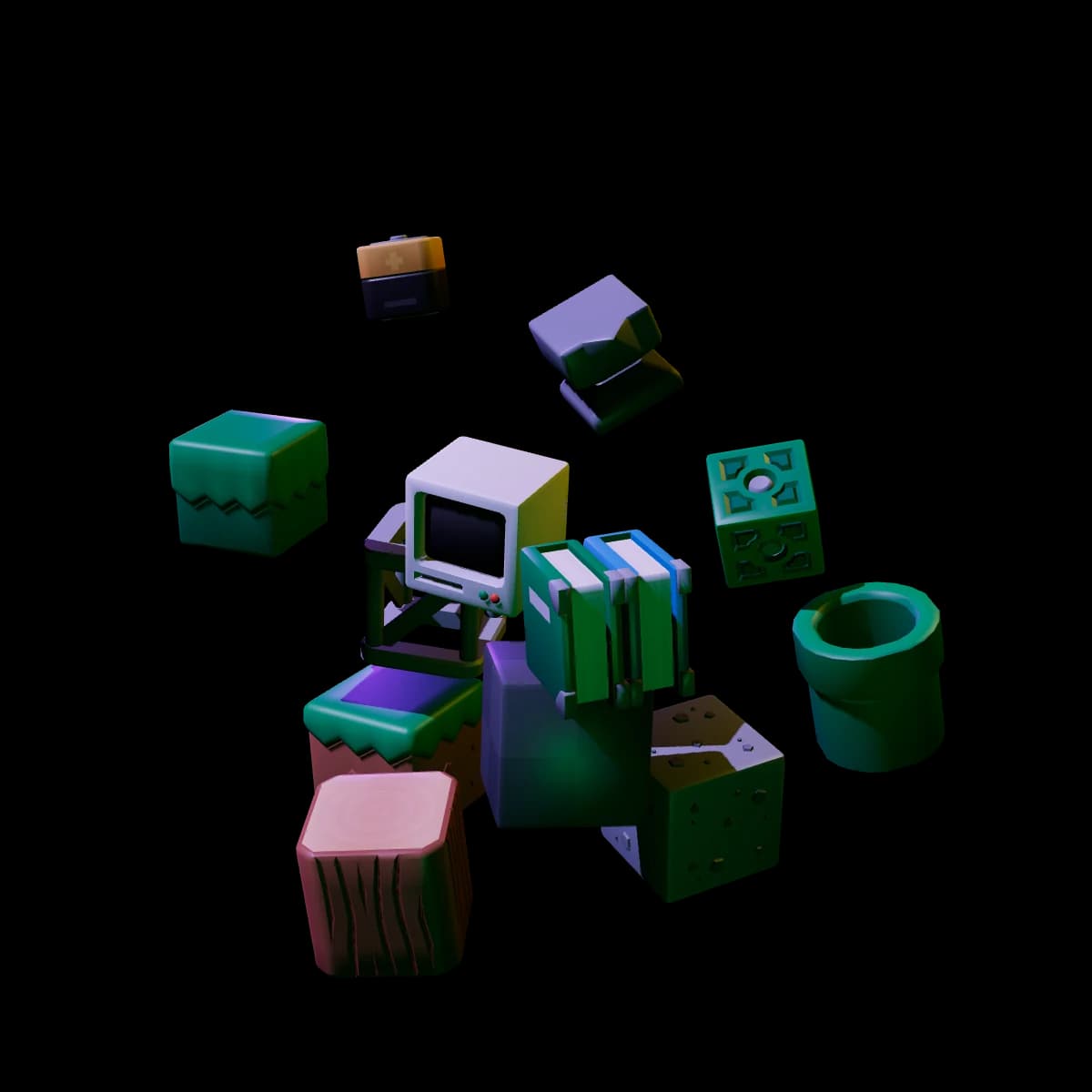
There is no build screen to go to and come back from. You are standing in the world, holding a block, with everybody else still standing in it — and what you place appears under their feet as you place it.
The palette
Fifty-eight pieces
Walls, floors, slopes, stairs, plants, furniture, lights. Three groups, one palette, and it is the same palette in every world you own.
Goalposts
Their own thing rather than a block, because a goal has to know it is a goal. Place two and the world is a pitch.
Rooms
Open one, name it, cap it, list it or keep it off the list, set it creative or battle, and decide whether guests may build in it. Closing a room keeps everything in it — it just leaves the list.
The catalogue
Every world anybody published, filtered by twelve tags that are a fixed vocabulary rather than free text — so every filter has results in it and none of them are the same filter spelled two ways. Drop one into your space and it is yours to change.
Save as arena
Any world you have built becomes a thing you can load into any world you own. Swapping the lounge for last month’s arena is one click, and the arena it came from is untouched.
The thingiverse
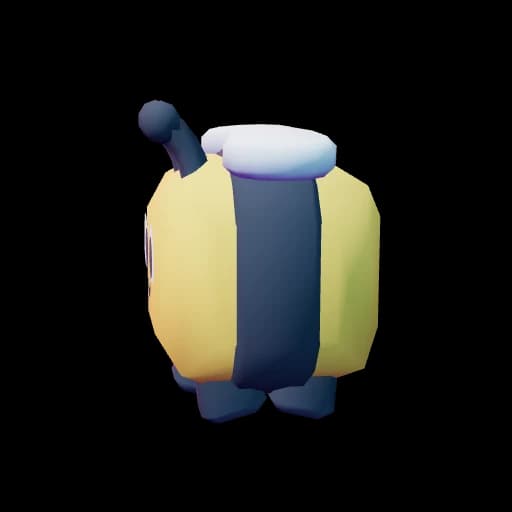
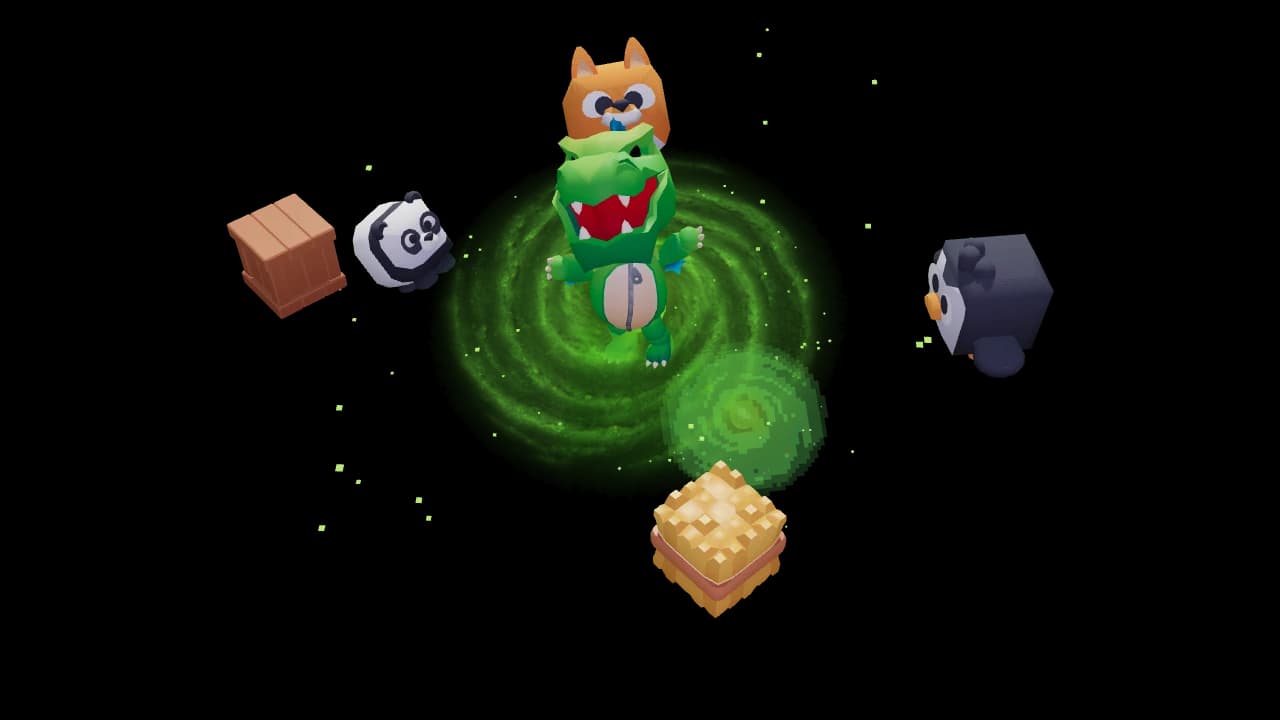
A block has no identity — cell (3, 0, 7) is dirt, and that is all there is to know about it. It cannot fall, it cannot be yours, and it cannot be a fountain. So there is a second way to put something in a room: type a word into the chat box, and the thing appears in front of you.
 Fountain
 Bench
Bench Machine
 Burger
 Cake
Cake Till
Till Crate
Crate Barrel
 Target
 Chest
Chest Apples
 Kart
KartA kind of thing, and then things
Every ball falls the same way, so how it falls is a fact about balls — and where this one is is a fact about it. You author the first and summon as many of the second as the room can hold.
Four whens, eight deeds
Play a clip, spin, bob, vanish, say something, become something else, swing, shoot. Rows in a rail panel while you stand next to the thing, not code — every word in the list is one you can check by looking at it.
A timeline when one thing is not enough
The lid opens, waits and shuts. The sign flashes twice. A cue names a moment and a verb, and it can name the part it happens to — so a market stall spins its sign rather than spinning the stall.
Five thousand seven hundred and seventy models
Both catalogues at once: the eleven packs a world is built from and the forty a level is. A space should not be able to put a bench in its lounge and not a treasure chest.
Four things can happen to a thing, and the list is short because a room is not a level: nobody is scripting it, and whoever is setting this has a rail panel open and is standing next to the object.
A space keeps up to 250 of its own, and typing /thingiverse ball reaches yours before it reaches the packs — because if somebody here has already decided what a ball is, that is what the word means.
Modes
A world is in one of two modes, and the mode is the whole permission system for building.
Flipping the switch is how you say “we’re done building, we’re playing now”. A room has its own switch, so one corner of a space can be building while another is fighting.
States
Cooked is not a pose the raw burger is holding. It is a different model, it lasts, and nothing about the room puts it back — so a thing gets up to 8 named states and a set of changes between them. A crate that has been broken open stays broken. A target that has been shot is gone for eight seconds and then is a whole target again.
The recipe lives on the table, not in a book. A cutting board makes a salad, a pan makes a patty, and a grill makes neither — putting the recipes on the object is what makes the object worth walking to, and it is also what makes a recipe reviewable: it is right there in the panel of the thing it belongs to.
And in a room set to battle, a thing has health. A crate you cannot break in a world built for a fight is not restraint, it is a hole.
Animation
Drag a hand and the arm follows it. A key is not a curve on one bone, it is the whole pose — which is what makes an animation something you can author standing up in twenty minutes rather than something you open a second application for.
You pose the body somebody actually wears rather than a grey mannequin. Every skin shares the dummy’s skeleton exactly, down to the name of the slot a hand holds things in, so an arm that cleared the body while you were posing still clears it on the knight.
Save it to the shelf and a blueprint can name it. Now the thing you built has an animation nobody else has.
Then play in it
Set the goals down and start a football match, and the ball lands in the thing you made. Or run a tournament in it. Or publish it as a battlefield and let other spaces come and fight in it — yours stays exactly as you left it, because the match happens in a copy.
Studio
Three studios, off the same models the world uses.
The peeps in it are the peeps in your world, so a film you make of your space is a film of your actual space. Send it to whoever wasn’t there.
Not yet
Said here rather than found out later.